Rules Regarding Ivory in Your Collection
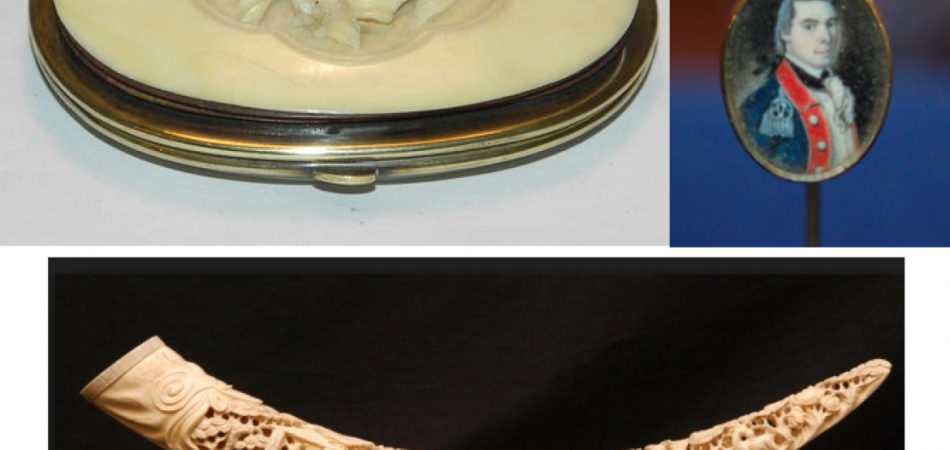
Over the years, ivory has been used in everything from Russian and English miniatures to Chinese carvings. What was once a thing of beauty is now a thing that reflects concern for the world’s endangered species. As The Appraisal Group believes that a knowledgeable client is the best client, we offer you these guidelines on the ivory you have in your collection and the ivory you may want to purchase as a collectible.
The first thing you need to know is that fine art and antiques with ivory that are already in the United States can be sold domestically and exported only if there is documentation that verifies the ivory was harvested prior to 1976 or it was imported before 1976. That is when CITES (Convention in International Trade in Endangered Species) went into effect.

That mandate makes it illegal to import any item containing African-elephant ivory for commercial purposes. There are, however, a few items with ivory in them you are allowed to have if they were inherited or part of a household move. This applies to musical instruments as well. To qualify, they can be imported for non-commercial purposes if:
- The item is accompanied by a document from the exporting country attesting that it was acquired before 1976 (by the current or previous owner);
- It has not been bought or sold since February 25, 2014. Once in the United States, these items cannot subsequently be bought or sold.
Antiques containing Asian-elephan ivory can b sold within a state only if acompanied by CITES documents saying it was imported prior to 1975.
You can sell across state lines only if the object has not been repaired or modified with ivory or any other part of a federally protected species (as defined by the Endangered Species Act) since 1973. It also has to pass the 100-year old test. It had to be imported prior to 1982. If it was imported after 1982, it must be proven that it came through one of 13 ports specifically designated for antiques. The other possibility is that you must prove the item was manufactured in the United States from legally imported ivory.
Finally, an antique embelished with Asian-elephant ivory can be sold only within states only if it is accompanied by documentation from CITES certifying that it was imported prior to 1975.
For more information, here are two resources: U.S. Fish and Wildlife Service: Endangered Species Act Overview and Convention on International Trade in Endangered Species of Wild Fauna and Flora (CITES).
Your best protection agains possible misunderstandings about Asian elephant ivory is to contact The Appraisal Group. Our email is appraisalgroupusa@gmail.com.




 By Admin
  0 Comment
  Dec 17, 2022