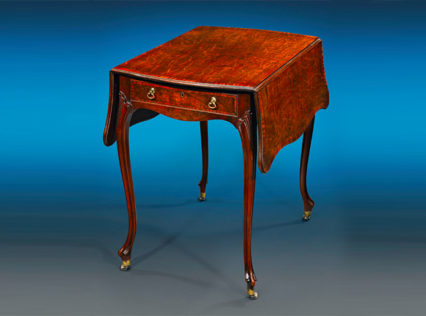
American Arts & Crafts Movement Celebrates the Middle Class
Amazing as it sometimes seems, before there was an Internet, there were cross-currents of thought that resounded around the world. It may have taken longer for the ideas of William Morris and John Ruskin, proponents of Britain’s Arts & Crafts Movement, to reach America but they did. The “back to nature” concepts were taken up Elbert Hubbard and Gustav Stickley, among others, and became the leading style from 1905 to 1935. The Appraisal Group sees a lot of beautiful antiques and fine art from the period in older houses.
The underlying concept was simplicity and honest craftsmanship that maintained the integrity of the materials. In other words, the principles of the American Arts and Crafts Movement celebrated the middle class that, by the beginning of the 20th century, was well established. The style was the pre-curser to the mid-century Studio Crafts Movement we blogged about recently.

The vision Elbert Hubbard and Gustav Stickley shared appealed to a society worn out by the Industrial Revolution, urbanization, tenement living and much in need of getting back to their roots. For Hubbard, this meant creating a commune of artisans in Aurora, New York that went by the name Roycroft. Stickley confined himself to furniture making. Between the two of them, they allowed American style to break from the flashy opulence of 19th century “new money.”
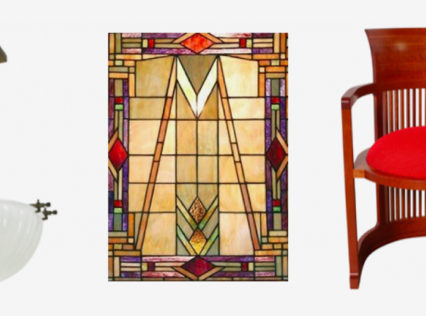
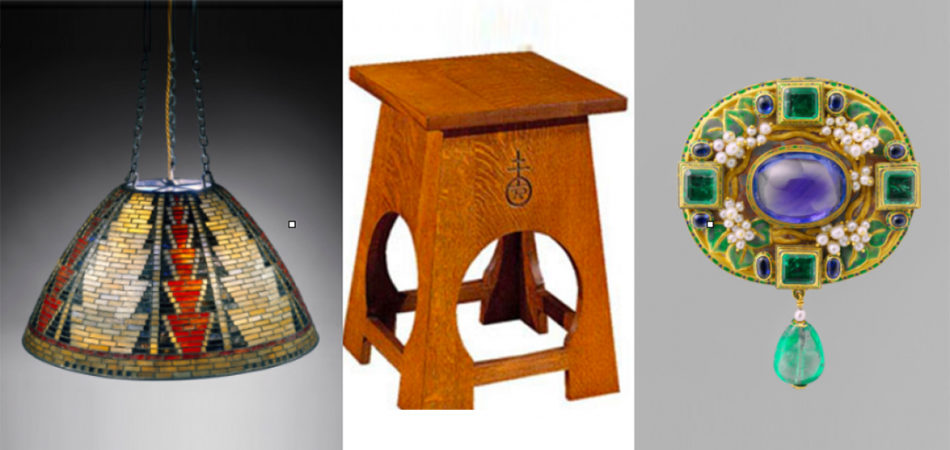
The hallmarks of the American Arts and Crafts Movement cut across all disciplines. Our much loved Newcomb Pottery was an outgrowth of the concept. Louis J. Tiffany also produced magnificent pottery in this style as well as leaded glass lampshades. Hammered copper items from Roycroft are another example of the style. (Elbert Hubbard nicknamed his copper workers “the anvil chorus”.) Faience, glazed pottery, from Grueby, Gates/Teco, Rhead, and Paul Revere Pottery are a few of the makers that collectors still fight over. Woodblocks are another of the decorative items form the period.

All of these beautiful items typically filled Craftsmen-style houses. If you’re not sure, these are usually two-story square house with a hip roofs behind a variety of bays and gables are another example. The style inspired Frank Lloyd Wright, among others.
The best of this much-admired style can be seen at the Two Red Roses Foundation in Palm Harbour, FL., and in Asheville, NC at the Grove Park Inn. (St. Petersburg, FL is set to launch the Museum of the American Arts and Crafts Movement (MAACM) )
Another wonderful repository of Arts and Crafts decorative art is the Victoria & Albert Museum in London and the Metropolitan Museum of Art in New York City.




 By Admin
  0 Comment
  Dec 16, 2022