Celebrating African-American Artists: Clementine Hunter
The Appraisal Group celebrates the work of Louisiana’s own Clementine Hunter (1886-1998). From the Cane River region of the state, Ms. Hunter is among the first African-American artists to have a solo exhibition at the present-day New Orleans Museum of Art. She is one of the few 20th century artists to be honored by an opera-that delicious, all encompassing art form that trades on grand and layered stories. Zinnias: the Life of Clementine Hunter, by Robert Wilson was presented at Montclair State University in New Jersey in 2013.

Self-taught, Clementine (pronounced Clementeen) Hunter falls into the category of primitive painters also known as Outsiders. ( Outsider Art began as Art Brut, a genre identified by Jean Debuffet. The English synonym was coined by Roger Cardinal in 1972.)
A field hand for much of her life, Ms. Hunter did not pick up a paint brush until in her fifties. Her first brushes and paints were those left by an artist who visited the artists’ mecca Melrose Plantation, where she then lived and worked. Hunter’s artwork depicted plantation life in the early 20th century, a time that has been eclipsed by civil rights, technology and equal education. Simplistic by most artistic standards, her paintings often evokes strong emotions in the viewer.
Ms. Hunter gained celebrity in 1953 when she was featured in Look magazine. With works selling for thousands before her death, she was never able to break the poverty cycle. Neither did she name her paintings. Asked for titles, she would simply describe the scene of the painting.
When I worked with my Dad, Morton Goldberg, in one of New Orlean’s first auction houses, we regularly saw works by this Creole artist come to the podium.
A director of the American Folk Art Museum in New York City called Clementine Hunter “the most celebrated of all Southern contemporary painters.”
Most of Ms. Hunter’s works are in museums and private collections. Undocumented works often show up in routine appraisals. having been unrecognized by inheritors. If you come across a Clementine Hunter painting, call The Appraisal Group to authenticate it. Forgeries do exist. If your work of art is truly by Clementine Hunter, it is a thing of beauty you may want to keep and pass on, although it is quite likely to be worth thousands. Far far more than the twenty five cents she originally sold them for.
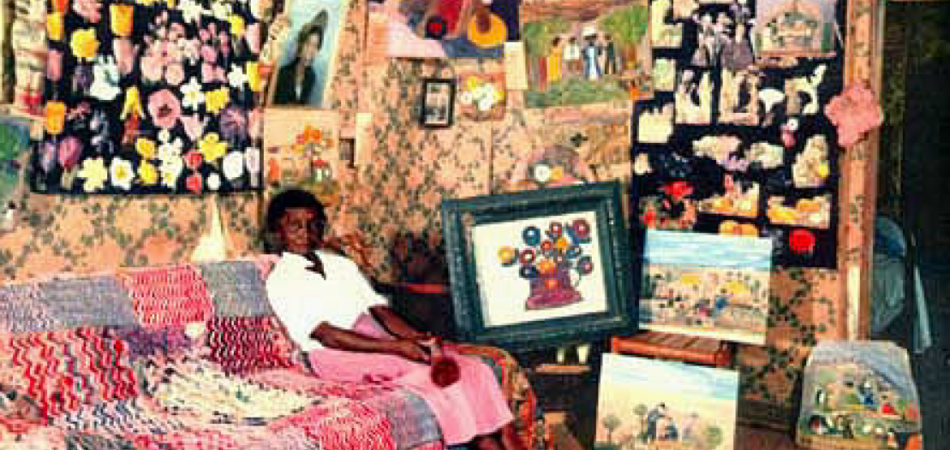
Editor’s Note: Today’s featured image of Clementine Hunter is from Look magazine, June 16, 1953. Photo by Clarence John Laughlin.




 By Admin
  0 Comment
  Dec 17, 2022